EzeFare
Employee-transport platform for companies, vendors and drivers: a 273-route NestJS API, a 91-page web app and two Android apps.
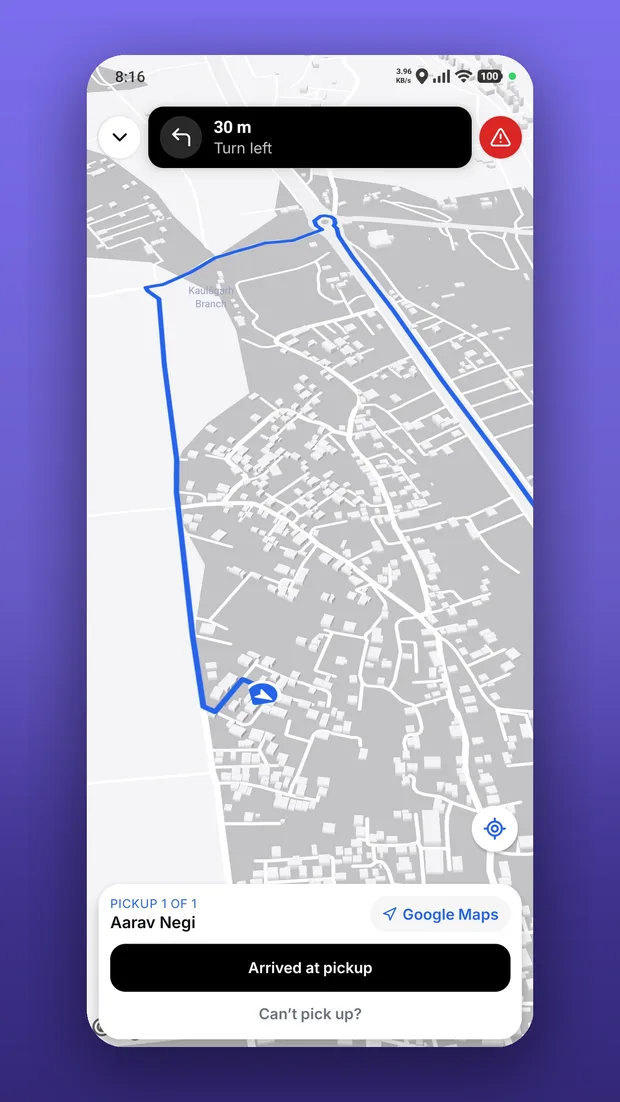
driver app GPSSocket.IO, HTTP fallbackNestJS buffer (5 s batches)live maps on web and phone
The product
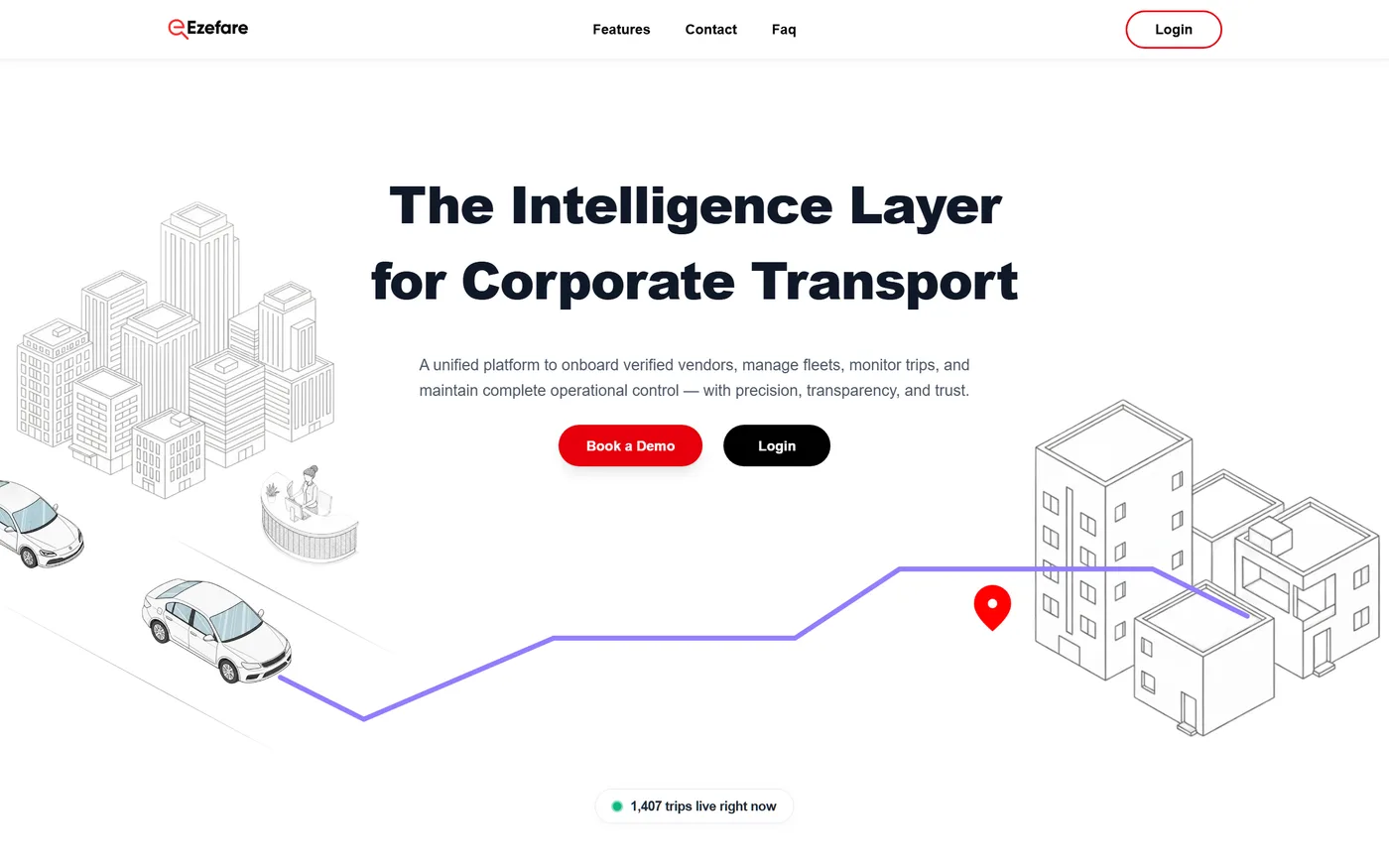
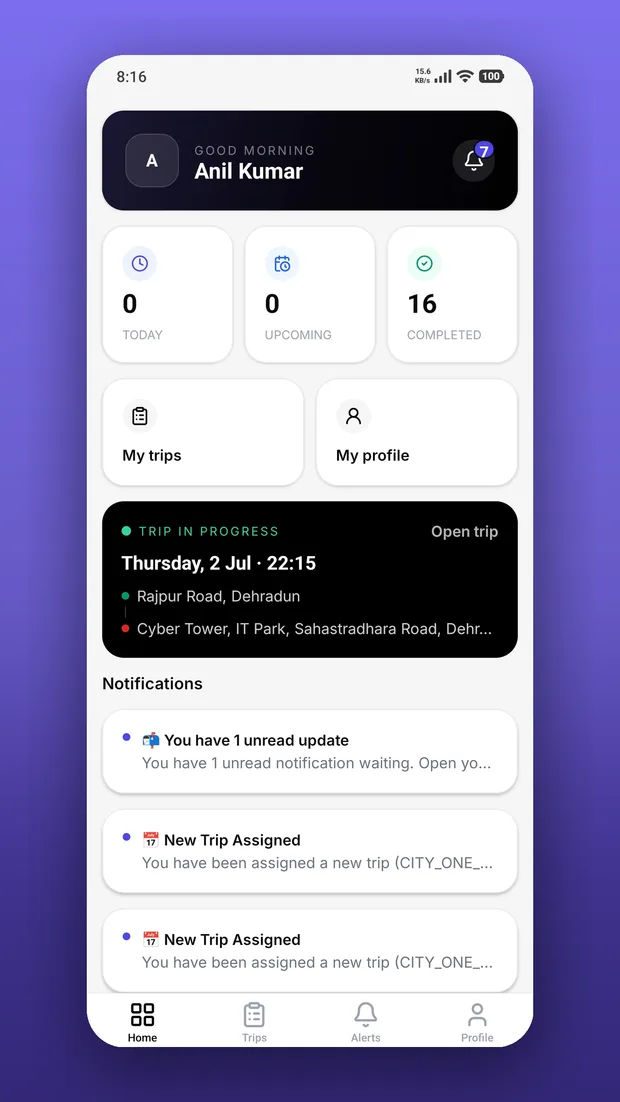
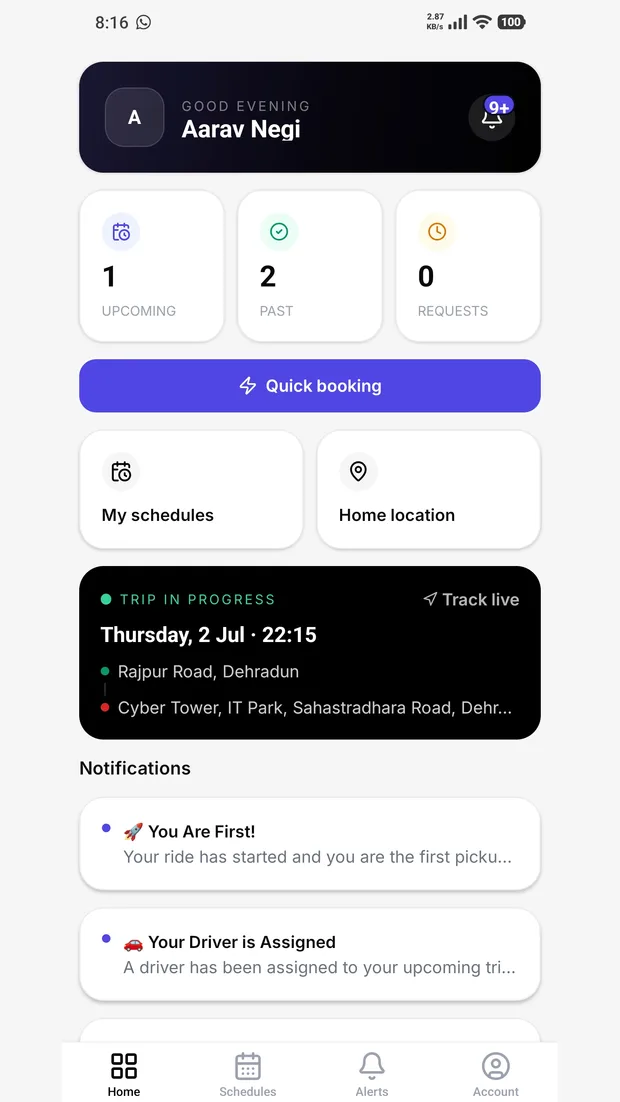
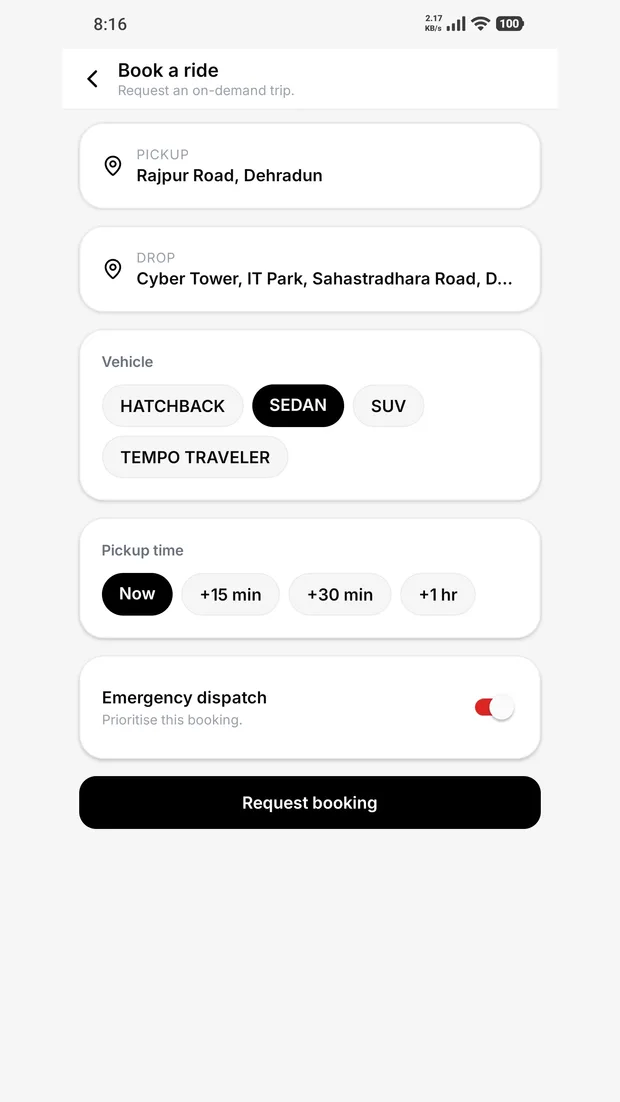
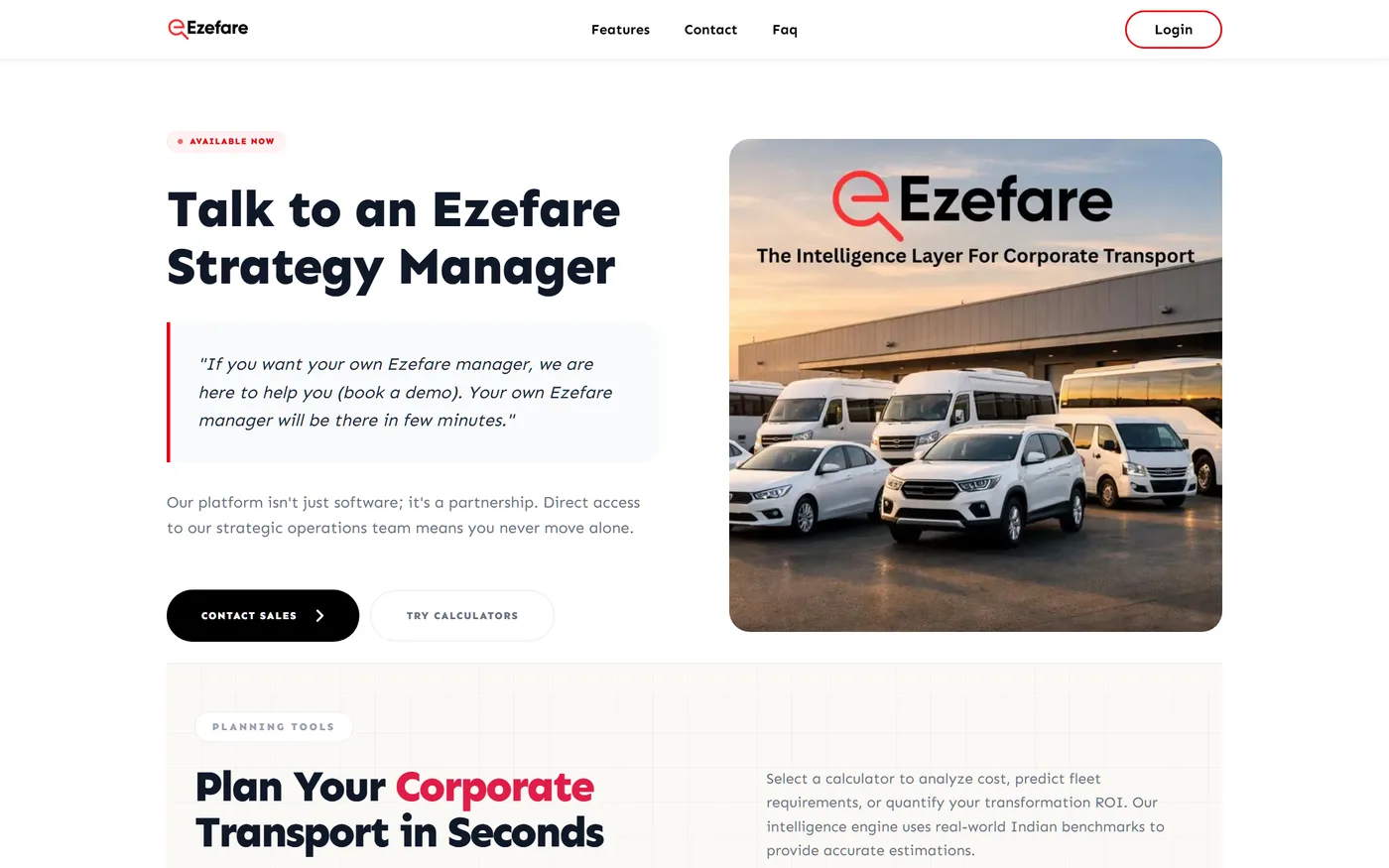
EzeFare is a B2B platform for corporate employee transport in India: companies book recurring shift trips for their staff, vendors supply fleets and drivers, employees track live rides, and an admin console runs dispatch, billing and compliance.
As a freelance engineer for the client, I built most of it: the NestJS and PostgreSQL API (273 REST routes, more than 1,100 Jest tests in CI), the 91-page Next.js web app with portals for admins, clients, vendors, drivers and employees, and one Expo codebase that ships as two Android apps on Google Play. I worked with the client from raw requirements to handover.
Under the hood
THE ENGINEERING
- 01
Automatic vendor allocation that remembers failures: exponential backoff on a failed route estimate, then a 6-hour hold, with ops told once per shift instead of every 2 minutes
- 02
Money handled carefully: signed client and vendor ledgers, one GST source, Decimal maths rounded once, a reconcile report, and a row lock so two invoice runs can't bill a client twice
- 03
Live GPS: the server keeps the latest ping per trip, broadcasts it before any database write and batches writes every 5 s
- 04
10 database-configured cron jobs behind Postgres advisory locks, so only one server runs each tick, and trip creation catches up after an outage (up to 6 hours)
- 05
A trip state machine checked on every status write, SOS alerts saved before any notification goes out, and OTP-verified pickups
- 06
CI runs lint, Jest, the build and an OpenAPI drift check; the web app's API types are generated from the backend spec
- 07
Multi-stop route optimisation through Google Directions, behind a route cache with request coalescing so concurrent callers share one billed call
In the product
Next case study
PulseFleet →